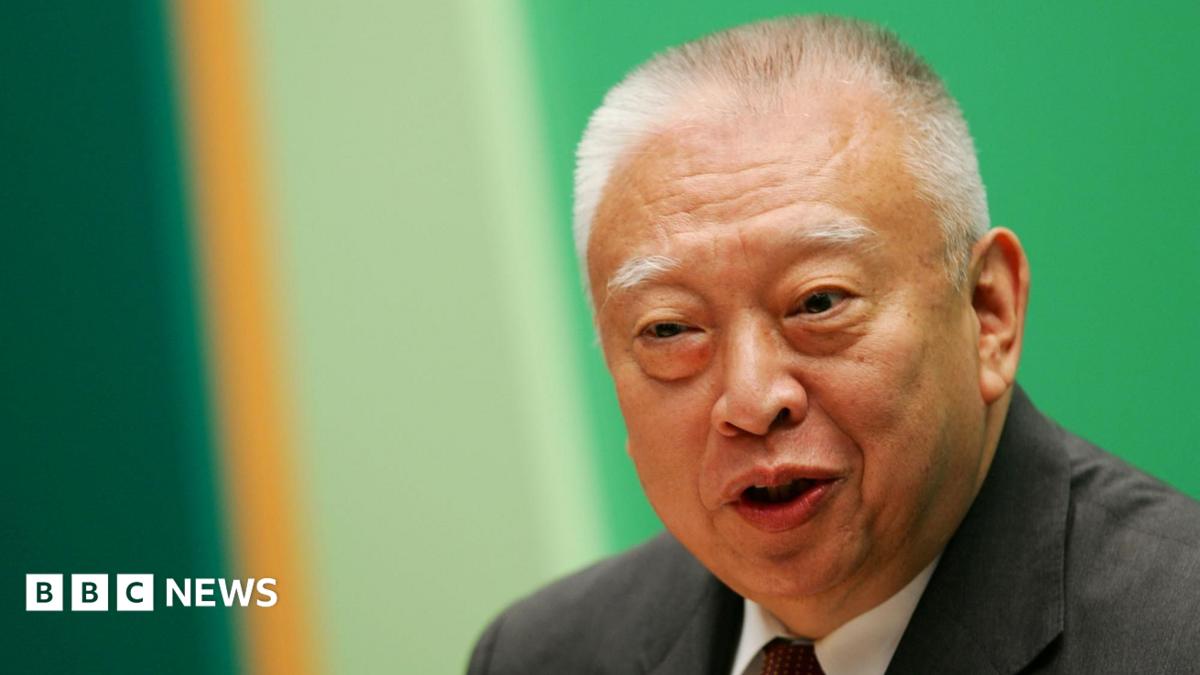
Tung Chee-hwa, the first leader of Hong Kong after the city returned to Chinese rule, has died at the age of 89. The former shipping scion took the reins from the last British governor, Chris Patten, in July 1997, when the UK handed Hong Kong back to China, ending more than 150 years of British control. Tung’s difficult tenure was marked by the Asian financial crisis, two major epidemics and historic protests that drew criticism of his administration. He finally resigned in 2005. Tung died Tuesday night surrounded by his loved ones, local media reported. His office described him as a man “dedicated to his country and its people.” “His noble character and integrity will live forever in our hearts,” he said in a statement. Born in Shanghai in 1937, Tung graduated in mechanical engineering from the University of Liverpool in the United Kingdom before moving to the US, where he worked at General Electric for almost a decade. In 1969, he moved to Hong Kong and worked at his father’s shipping conglomerate, Orient Overseas, eventually taking over the reins in 1979. His political career began in 1992 when he was appointed to Patten’s executive council. Despite having little political experience, Tung was believed to have been chosen by Beijing to lead Hong Kong after the handover. He was seen as a loyalist, especially after China’s state banks helped rescue his family business during a global crisis in the mid-1980s. During a reception at the Great Hall of the People in January 1996, China’s then-president Jiang Zemin crossed a packed room to shake Tung’s hand, a widely photographed gesture that at the time signaled Beijing’s backing of Tung for the top job.