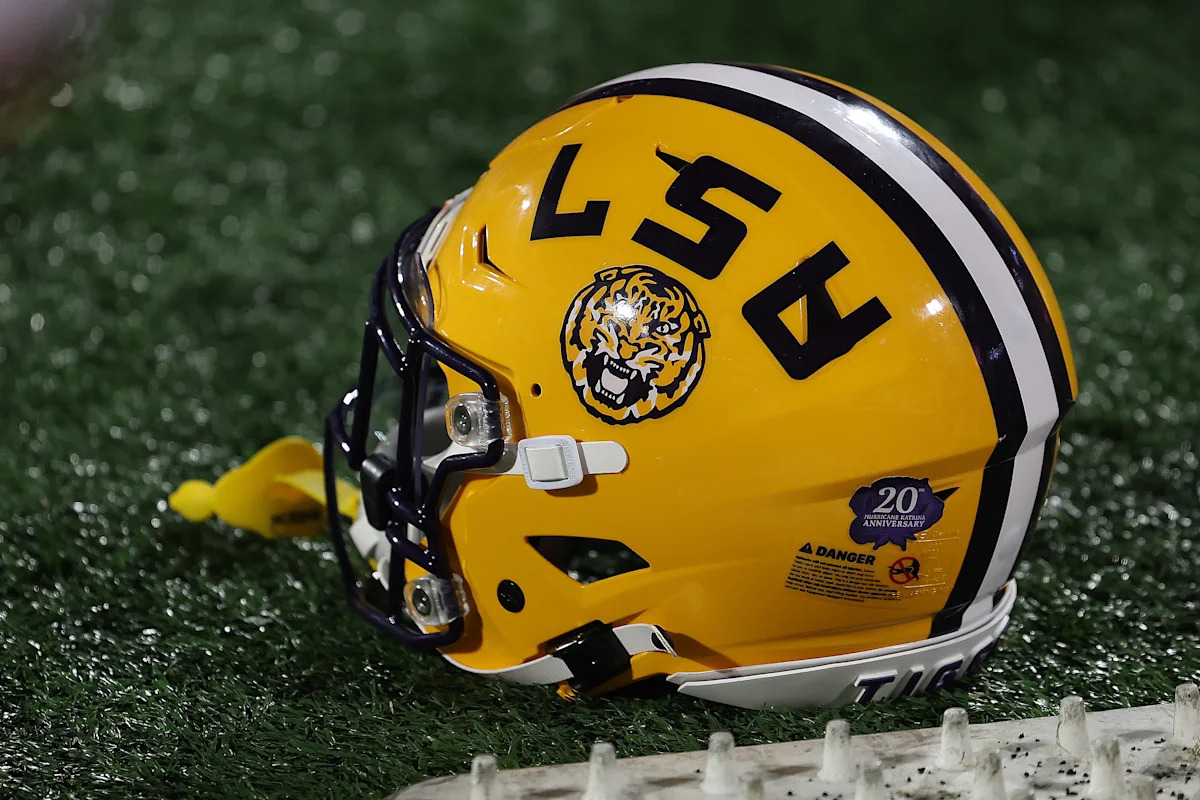
Clemson officials notified LSU that the participation of former professional football players on Saturday may violate the playing contract between the schools. In a brief email sent Friday afternoon to LSU’s general counsel, Clemson general counsel Chip Hood made it clear that the school intends to travel to Baton Rouge and play Saturday’s season opener, but addressed issues of “certain eligibility” that may break “contractual obligations between the two parties.” The obligations are “not alleviated by ongoing disputes,” according to the email obtained by Yahoo Sports. Advertisement The university is not seeking financial damages or in any way suggesting filing a legal claim against LSU. However, Clemson emphasizes that it “supports the position of the NCAA and our conferences regarding the eligibility of professional athletes returning to play college sports.” Clemson administrators and legal counsel have spent the last few days examining the game contract, which includes an article prohibiting ineligible players from participating. LSU has not taken steps to formally add professional players to its roster, but a Louisiana judge cleared the way for such a possibility Thursday, granting a group of athletes a preliminary injunction. for a fifth season of eligibility, including players who signed professional contracts and have committed to join coach Lane Kiffin’s team. In an interview with Yahoo Sports on Thursday, South Carolina Attorney General Alan Wilson expressed strong feelings toward any professional athlete who takes the field against their state school. “This is about justice,” he said. “If LSU wants to change the rules for those players, they can ask the SEC to apply for a waiver, but by going to court… Think about the parade of horrible things. If LSU wins, all the other SEC schools can go to their courts and get a different judge to say something. Total chaos and anarchy would ensue.” Wilson declined to comment on Clemson’s examination of the game contract, as he had not reviewed it himself. That said, he believes the SEC, as a private organization, should be allowed to govern itself and enforce its rules, especially a charter approved by all 16 college presidents. LSU President Wade Rousse voted to reaffirm the conference’s ban on professional players last week during an in-person meeting in Birmingham at the league office. “Once you become a professional athlete, you’re banned. All other schools abide by this rule,” Wilson told Yahoo Sports. Wilson is scheduled to travel to Baton Rouge for the game, which is sure to be a tense atmosphere for the visitors. “I might have to increase my security when I go there!” he said laughing. In the lawsuit, the SEC claims that LSU and coach Lane Kiffin “orchestrated [a] “The program has public commitments from at least three players who signed professional contracts and were court-ordered to return to college as part of the lawsuit, including former Ole Miss players Dae’Quan Wright and Zxavian Harris. Their impending additions to the roster (the players said Thursday they expected to be added) would not only violate the SEC’s rule against professional players, but would also break the league’s policy against players transferring from one conference member to another outside of the conference window. transfer portal. While Wright, a tight end, has already been practicing with the team, LSU has not clearly stated that it will add players to its roster. that the program has no choice. On Thursday, a Louisiana judge not only granted the players an injunction, but barred LSU as a defendant in the case, along with the NCAA and the SEC, meaning the Tigers are prohibited from taking actions that negatively impact athletes, such as deciding not to add players to the roster after promising them spots to list their plaintiffs. rudderless landscape of college sports, conference-wide rules This is perhaps the first test of a long-discussed new model that SEC leaders are exploring: a league-only governance model where the conference, not the NCAA, creates and enforces policies as a way to limit legal challenges. The SEC’s approach to the LSU situation is a clear sign that the conference believes it must vigorously defend its rule or else risk collapsing any concept of league governance. Sankey himself took it seriously enough to appear in court. As indicative of the current state of the industry, the SEC commissioner spent more than three hours of the first week of the football season on the stand testifying during the preliminary injunction hearing in Louisiana. Sankey is not expected to attend Saturday’s Clemson-LSU football game, which is scheduled for 7:30 p.m. on ABC.