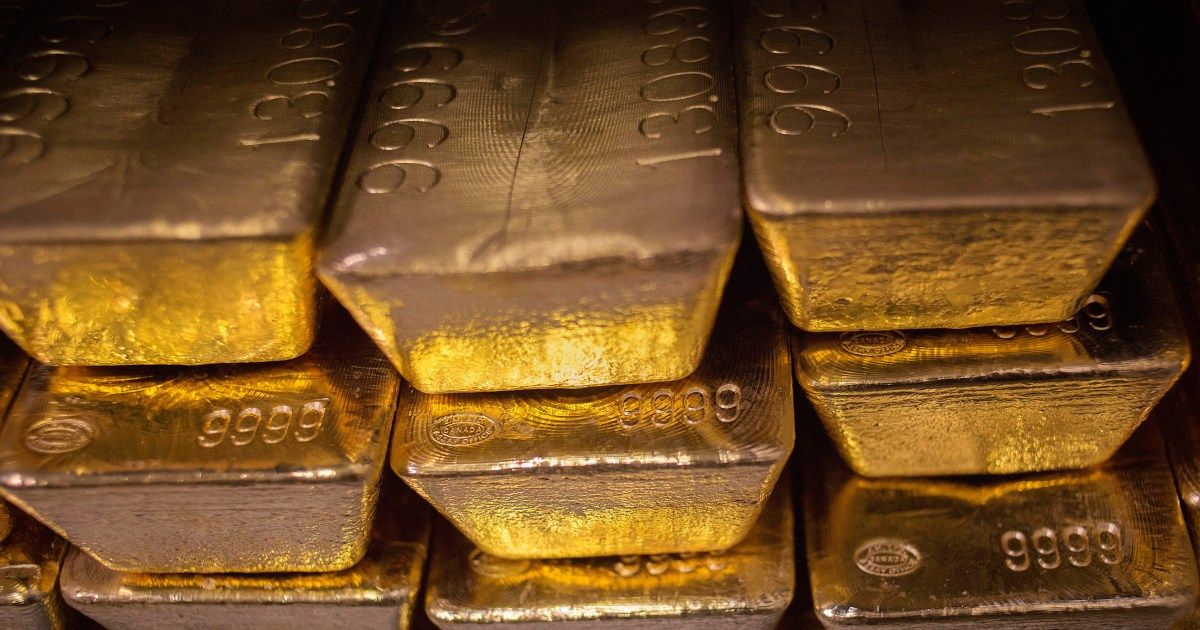
The Netherlands withdrew billions of dollars of its gold reserves from the United States and Canada and transferred them to the United Kingdom amid global geopolitical tensions. On Wednesday, the Dutch Central Bank (DNB) said it had moved gold reserves to ensure it was “better prepared for serious crises.” is waging war in Iran and has led operations in Venezuela and around Cuba in recent months. Furthermore, tensions between Europe and the US have increased since the start of the US war against Iran in February this year, as Trump has made his displeasure known over the reluctance of European allies to join the war. we need to strengthen our resilience and preparedness.” How many gold reserves does the Netherlands have? What does this mean for the United States? Here’s what we know: How many gold reserves does the Netherlands have? The Netherlands has 612.4 tons of gold, valued at approximately 72.2 billion euros ($83.8 billion), in gold reserves. These can serve as security in times of potential crises, where regular financial systems could fail. As part of their standard risk diversification strategies, the Countries tend to distribute their gold reserves in different places to ensure the greatest security. DNB distributes these gold reserves in different places, including its own Cash Center in Zeist, as well as in central banks in the United Kingdom, the United States and Canada. gold reserves from North America to the United Kingdom, the spread is now as follows: Zeist, 30.8 percent; London, 32.1 percent; New York, 18.5 percent; and Ottawa, 18.5 percent. How has the gold moved? hours on Wednesday (13:00 GMT) was estimated at 10.34 billion euros in the Netherlands. It was moved in two ways: by selling gold in one place and buying it in another; and by physically transporting gold bars from one place to another. According to DNB, the transfer of gold reserves began when the bank first sold about 59 tons of gold (worth about $8.3 billion) in New York and then bought gold in London. In total, around $10.7 billion worth of gold has been moved from New York, while just over $1 billion has been moved from Ottawa, based on December 2025 valuations. The decision to move gold – and to do so in two ways – is part of its risk diversification strategy. He stated: “The combination of buying and selling processes and physical transportation has allowed DNB to spread the risks associated with such a physical gold relocation operation. complex, while ensuring efficiency and cost consciousness. This also fits with DNB’s efforts to increase its crisis preparedness. “Why the Netherlands might be moving gold away from the US? In its press release on Tuesday, DNB said it is trying to ensure its gold is “easily marketable” and stressed that it considers London a safe place to store it. “Keeping a greater proportion of gold reserves in London strengthens gold’s role as an anchor of confidence. Gold is considered the ultimate reserve asset because it is ideal for hedging extreme systemic risks,” DNB said. “Gold reserves held in New York and Ottawa cannot be used as quickly and directly in such a situation,” the bank said. DNB has not explained what “systemic risks” it might be protecting against. However, the Netherlands has withdrawn much more gold from the United States than from Canada, and analysts speculate that there may be several reasons to fear instability in transatlantic relations. Schneider, senior member no resident at the Middle East Global Affairs Council, said the Netherlands has moved gold for “the same reason that other countries have been repatriating or discussing repatriating their gold for more than 10 years, including Germany, France and Italy, namely to gain physical control over their gold reserves,” however, that desire has “gained momentum” since Trump’s second inauguration as US president, “and.” [Trump’s] increasingly bellicose and erratic behavior even towards its allies, and the increasing militarization of the dollar, international trade relations and international payment systems by the United States. [have] made many countries very nervous,” Schneider added. Specific topics may include: Trade wars First, Canada and the United States have been locked in a trade war since 2025. The Trump administration hit Ottawa with tariffs on its key steel, aluminum and auto sectors last year. Then, in August of this year, Washington imposed an additional 50 percent tariff on $20 billion worth of Canadian goods after trade talks between the two countries failed to reach In response, Ottawa unveiled retaliatory measures, imposing tariffs against more than 700 US products, also valued at $20 billion. These tariffs are staggered at 15, 25 and 50 percent, and are scheduled to take effect on September 8. Military wars Second, in addition to the various trade wars that the Trump administration has been involved in during President Donald Trump’s second term in the White House, the war. between the United States and Israel against Iran is ongoing, with no diplomatic or military end in sight, and Washington has also stepped up military operations around Cuba. In January, U.S. forces kidnapped then-Venezuelan President Nicolás Maduro in a lightning military operation and transported him to the United States to stand trial on drug and weapons charges. Tempers between the United States and Europe flared when Trump reiterated his ambitions to acquire Greenland and threatened European countries that stood in his way with more trade tariffs. In April this year, Trump railed against European countries, telling them to “go find their own oil” from the Gulf, where the war has led to the closure of the Strait of Hormuz, causing oil and gas shortages and chaos in global Strait of Energy markets. Hormuz, like the United Kingdom, which refused to get involved in the decapitation of Iran,” should buy American oil, Trump wrote on social media. His comments followed news that France had banned Israeli planes from flying weapons through its airspace and Italy had denied permission for US bombers to land in Sicily. Spain refused permission for the United States to use its bases and airspace for the war against Iran, and while the United Kingdom allowed the United States to use its bases, then-Prime Minister Keir Starmer told parliament that Trump responded that the relationship between the United Kingdom and the United States “is obviously not what it was.” A New Precedent for Asset Freezing Fourth, when the European Union first froze approximately $300 billion in Russian central bank sovereign assets in February 2022, just days after Russia’s full-scale invasion of Ukraine, many saw this as a new precedent. While central banks have long had the ability to freeze assets they own belonging to other nations, they have rarely done so, and not in war. The frozen assets represented about half of Russia’s total wealth of $640 billion. By aiming for a G20 supereconomy, the EU broke with a long tradition that the reserves of a major nuclear and economic power were off limits, according to standard international financial rules. The EU took a further step in 2024 when it and the G7 nations agreed on a mechanism to use the profits generated by these frozen assets for a $50 billion loan package for Ukraine. The bloc agreed to make the freeze on Russian sovereign assets indefinite, thereby eliminating the need to vote every six months on extending the asset freeze. As a result, countries may begin to calculate that it is high risk to hold reserves in the central banks of other countries where the government or leaders are considered unpredictable. Have other countries moved gold from the US? The Netherlands is not the first country to move its gold reserves from the US this year. 17 billion dollars, which had been in the Federal Reserve Bank of New York since July 2025, returned to France, citing as reasons a technical improvement and the search for better performance, the bank sold gold in New York and bought gold bars in Paris. Between 2013 and 2017, Germany moved more than 600 tons of gold (worth about $77.5 billion) from New York to Frankfurt to secure its national reserves, he said.