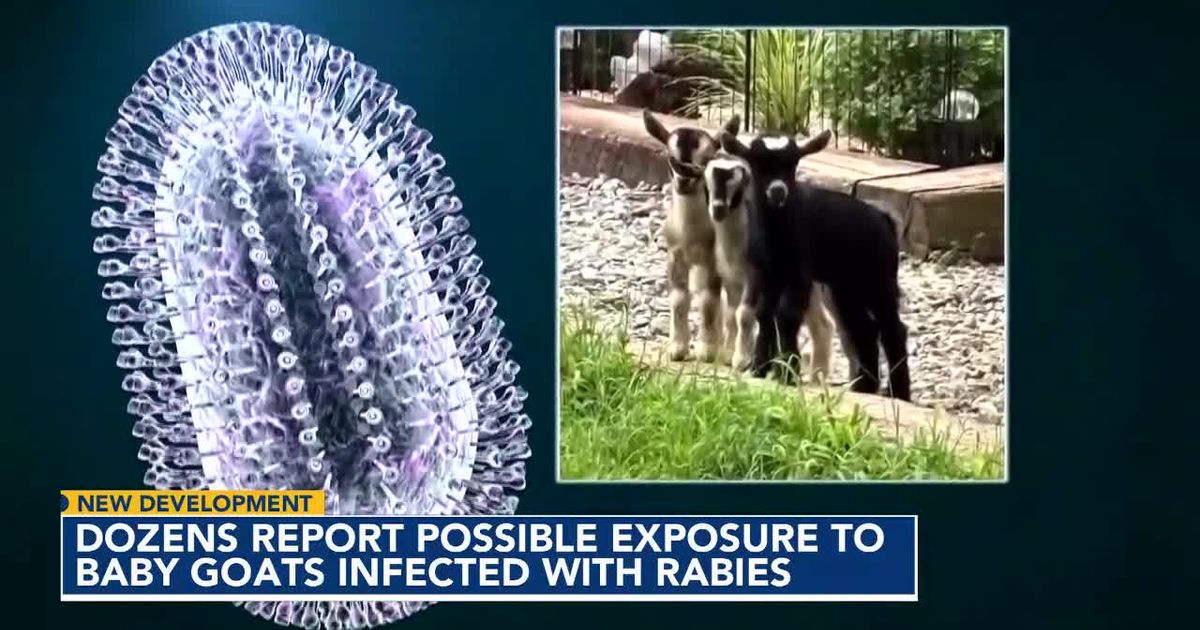
When you think of rabid animals, maybe raccoons or opossums come to mind. But goats?
State health officials say three goats tested positive for rabies last week. Another is presumed to have been infected.
The goats were part of a mobile petting zoo called Farm Adventures.
Dozens of people may have been exposed across seven North Carolina counties dating back to July 28. Two events tied to the possible exposure happened in Durham County, where health officials say fewer than 60 people have reported possible exposures to the baby goats.
Veterinarian Michael Martin is urging anyone who came into contact with the goats to call their local health department.
“I have not heard of a single case of humans getting rabies from a goat, but we know that they can happen because of livestock contact,” Martin said. “So, this is a serious event that, although the risk may be relatively low, you just don’t want to go down the path of what if you’re wrong.”
Martin said the cases pose a medical challenge with no labeled rabies vaccines for goats.
“Although there are no labeled vaccines, there is always room for people to discuss the situation,” Martin said. “And see if off-label vaccine use is appropriate given…what that animal may be doing as far as public interface.”
Health experts say you can only get the virus if an infected animal has contact with open skin like a bite or a licking an open wound. They are also reminding people to wash their hands or use hand sanitizer after coming into contact with animals to reduce their risk.
State officials believe the goats were exposed to rabies by a skunk that entered the pen where they were kept in late July. The goats were euthanized to prevent further spread.
Mother worries over family’s possible exposure
A visit with these goats ended in rabies shots for Kristie Jo Schutt’s family.
“We found out that this would be fatal if they had
contracted rabies,” Schutt said. “It was scary. We were freaking out.”
She said two of her kids came into direct contact with
goats from Farm Adventures in Davie County in August.
“My youngest son, he’s six. He cried himself to
sleep because he thought he had rabies. We couldn’t give him answers.”
North Carolina requires permitting and sanitation protocols
for animal contact exhibits. The state’s agriculture department said the laws largely only apply
to sanctioned agricultural fairs.
Recommendations from The National Association of State Public Health Veterinarians contact with young goats comes with increased concern at venues where groups at high risk of serious infection are expected to be present.
“If no licensed rabies vaccine exists for a particular species that is used in a setting where public contact occurs, consultation with a veterinarian regarding extralabel use of rabies vaccine is recommended. Mammals that are too young to be vaccinated should be used in exhibit settings only if additional restrictive measures are available to reduce risks,” the recommendations say.
Schutt said she would like more rules tied to private events
after her rabies scare.
“To think that this could happen, I never thought
they would be at risk for rabies,” Schutt said.
WRAL was unable to reach Farm Adventures for more comment on Tuesday after multiple attempts.