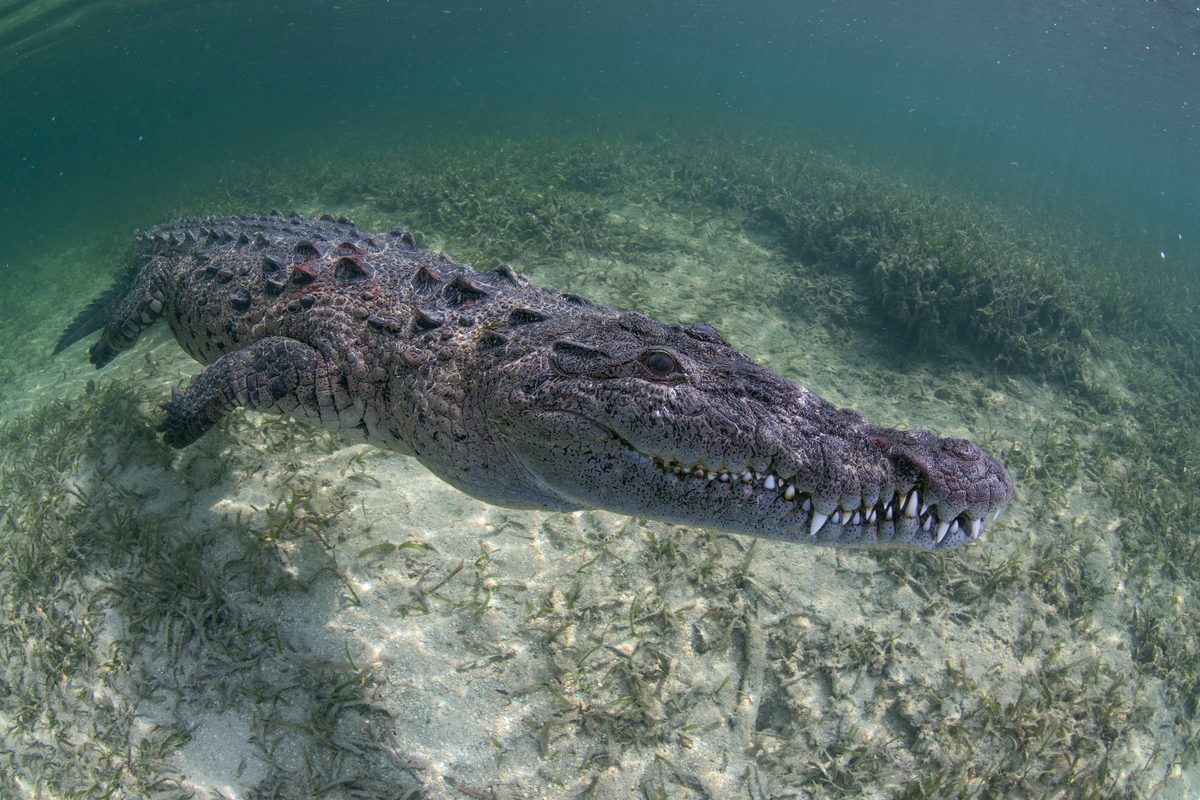
The Florida Everglades are a vast subtropical wilderness of salt marshes, mangrove forests, cypress trees, and slow-moving waters. But beneath its seemingly tranquil surface lives an extraordinary collection of predators. Alligators lurk almost completely submerged, venomous snakes disappear into the vegetation, and huge invasive pythons squeeze the life out of their prey. Even sharks can venture into the brackish waters of the region. But which animals really deserve their deadly reputation? The 8 Most Dangerous Animals Found in the Everglades American Alligator Kevin Trimmer/Getty Images With its black armored body, muscular tail, and powerful jaws, the American alligator looks like a survivor from another era for good reason: its ancestors have been around for more than 150 million years. Found in freshwater rivers, lakes, swamps, and marshes of the southeastern US, males typically grow to 10 to 15 feet in length and can weigh around 1,000 pounds. They are also excellent swimmers despite appearing bulky on land. Adult alligators are apex predators, feeding primarily on fish, turtles, snakes, and small mammals, although these opportunistic hunters will take on almost anything they can overpower. Rather than chasing their victims over long distances, alligators are ambush predators, often waiting almost completely submerged before darting out of the water. Humans have occasionally been killed, but such attacks are rare. Females lay between 32 and 46 eggs, but the life of the young is dangerous. Of an average clutch of 35, it is estimated that only four survive to maturity, and young alligators are prey to wading birds, otters, and even larger alligators. In the Everglades, alligators are much more than predators. During the dry season, they dig depressions known as “gator holes,” which retain water as the surrounding swamp dries and provide vital refuges for fish, turtles, birds and other wildlife. American Alligator Mark Chivers/Getty Images The Everglades is one of the rare places where American crocodiles and American alligators live side by side, but telling them apart can be tricky. Look at the snout. Crocodiles have a narrower, more tapering mouth than alligators, and when their mouth is closed, the fourth tooth of the lower jaw remains visible. They are also grayish green instead of black. South Florida marks the northern limit of the American crocodile’s range, where these shy, solitary reptiles inhabit brackish and saltwater ponds, streams and mangroves. They feed mainly on fish, turtles, frogs, birds and small mammals. And don’t be alarmed if you see one sunbathing with its formidable jaws wide open. Known as “gaping,” this is not a sign that it is preparing to attack. As cold-blooded reptiles, crocodiles depend on their environment to regulate their body temperature, and opening their mouths helps them cool down. Females lay between 20 and 60 eggs, which they incubate for about 85 days. When they are born, their mother opens the nest and takes her little chick to the water. Despite their fearsome appearance, American crocodiles are generally wary of people and will generally retreat if approached. Burmese python LagunaticPhoto/Getty Images One of the Everglades’ most formidable predators shouldn’t be there at all. Native to Asia, Burmese pythons are an invasive species that has become firmly established throughout South Florida, particularly in and around the Everglades. They are among the largest snakes in the world. Adults caught in Florida average between 1.8 and 2.7 m long, but the largest ever caught in the state measured over 5.4 m. These nonvenomous snakes kill by constriction, coiling their muscular bodies around their prey before swallowing it whole. And they have an extraordinary appetite: Burmese pythons can consume a meal equivalent to 100% of their own body weight. Almost anything is potentially on the menu. Mammals, birds and reptiles have been discovered in their stomachs, including protected species such as storks and the endangered Key Largo rat. Adult pythons have few predators in Florida and their impact on native wildlife is so concerning that wildlife officials are actively removing them from the Everglades. Although such a large snake is potentially dangerous to people and pets, it is the Everglades’ native wildlife that has the most to fear. Eastern Rattlesnake David A. Northcott The Eastern Rattlesnake is the largest species of rattlesnake in the world and one of the most venomous predators in the Everglades. It owes its name to the distinctive dark diamond-shaped markings that run along its back and hunts primarily small mammals and birds, striking its prey and injecting venom through long articulated fangs. But there is another surprising reason why this snake is so well adapted to Florida: it is an excellent swimmer. Eastern diamondbacks can cross expanses of water and have even used this ability to colonize islands. A bite can be extremely serious and requires immediate medical treatment, but rattlesnakes do not prey on humans. Its famous rattle is a warning, allowing a potential threat to move away rather than forcing the snake to attack. Despite their deadly reputation, snakes themselves face increasing threats. Habitat loss and fragmentation, road deaths, and deliberate killing by humans have caused them to disappear from some urban areas of Florida. Florida Cottonmouth Saddako/ Getty Images Also known as the water moccasin, the cottonmouth is right at home in the Everglades aquascape. These heavy-bodied venomous snakes average between 60cm and 1.2m long and are found in swamps, swamps, streams and lakes, although they can also wander surprisingly far from water. Young largemouths look very different from adults, with brown or tan bodies marked with reddish-brown bands and a striking bright yellow tail tip. They become progressively darker with age and some adults appear almost uniformly dark. They are also frequently mistaken for harmless water snakes. One clue is the deep, heat-sensitive hole between each eye and nostril, which helps cottonmouths detect warm-blooded prey. Despite their fearsome reputation, cottonmouths are not necessarily aggressive. But they are poisonous and should always be given plenty of space. When they feel threatened, they may curl their body, raise their head and gape, revealing the striking white interior of the mouth that gives the species its memorable name. Florida Panther Mark Newman/Getty Images One of the Everglades’ most elusive predators is also one of the largest. Florida panthers can measure between 1.5 and 2.1 m from nose to tail and weigh up to 73 kg. Their long tail is almost as long as their body and helps distinguish them from Florida’s other native wild cat, the much smaller bobcat. Panthers are solitary animals and are most active between dusk and dawn. They use densely vegetated forests as shelter to rest, raise their young, and stalk their prey. Powerful and stealthy hunters, they prey on animals such as deer and wild pigs. But despite being physically capable of seriously injuring a person, Florida panthers are elusive and encounters with humans are rare. In fact, humans pose a much greater danger to them. The Florida panther is federally listed as endangered and remains one of the most endangered mammals in the United States. Florida black bear Zocha_K/ Getty Images Florida’s largest land mammal may look cumbersome, but don’t be fooled: black bears can run at speeds up to 35 mph, climb 30 m up a tree in just 30 seconds, and are also excellent swimmers. Males typically weigh between 113kg and 204kg and have an extraordinary sense of smell, capable of detecting a scent from at least a mile away. Despite their size and strength, Florida black bears are opportunistic omnivores rather than fearsome predators. About 80% of their diet is made up of plants, including acorns, berries, and saw palmetto, while insects make up another 15%. They are naturally wary of humans and attacks are extremely rare. Problems are more likely when bears discover easy foods in homes, such as garbage, pet food, and bird feeders, which can cause them to lose their natural wariness. And if a bear stands on its hind legs, don’t assume it’s preparing to attack. Usually you are simply trying to see (and smell) better what is in front of you. Bull shark Julian Gunther/Getty Images Sharks may not be the first predators that come to mind in the Everglades, but the bull shark is no ordinary marine species. These stocky predators, which grow to between 3 and 3.4 m in length, have an extraordinary tolerance to different levels of salinity. They can move between the sea, estuaries and freshwater and are the only species of shark capable of tolerating long periods in freshwater. Some have traveled hundreds of kilometers inland through river systems. Bull sharks are opportunistic hunters with a remarkably varied diet. Fish, rays, other sharks, sea turtles, sea birds and even dolphins have been found in their stomachs. Females produce between one and 13 young after a pregnancy that lasts between 10 and 11 months. Shallow estuaries, river mouths and coastal lagoons provide important breeding grounds for their young. Bull sharks are also considered one of the most dangerous shark species to humans and have been responsible for numerous unprovoked attacks around the world, although an encounter in the Everglades remains unlikely. Discover more wildlife stories: