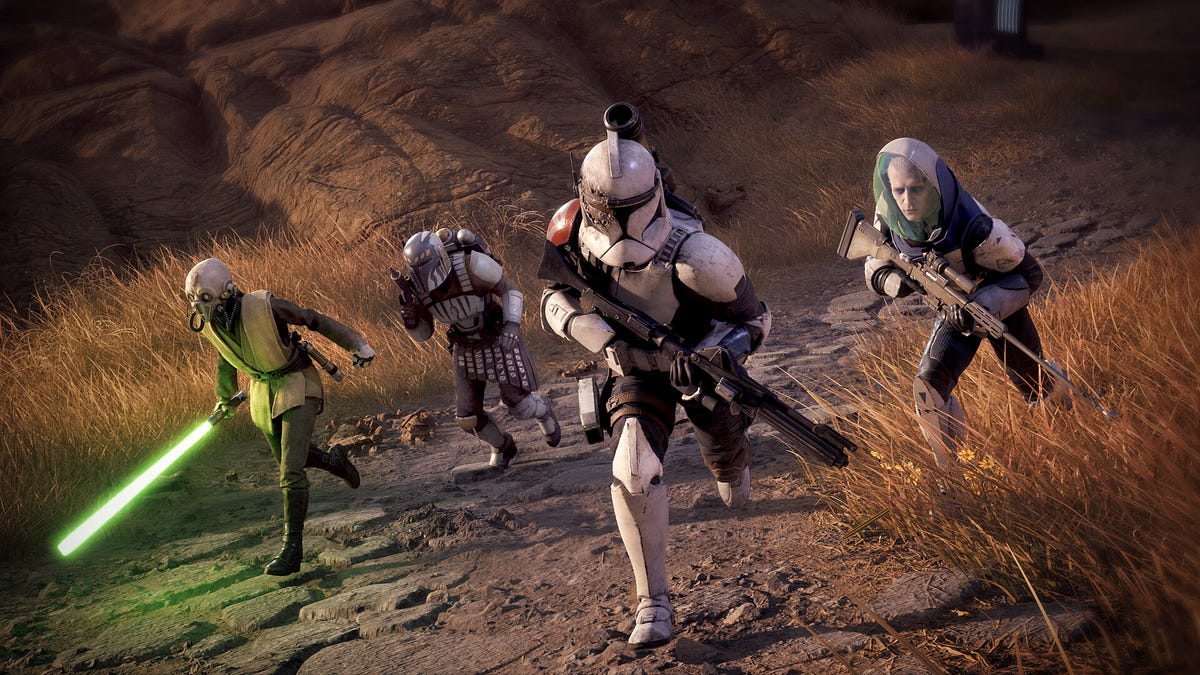
Star Wars Zero Company. Screenshot: Bit Reactor, LucasFilm Games, EA. Last week was destined to be a moment of triumph for Bit Reactor, the Maryland-based game studio founded in 2021 with the ambition of creating a great new tactical combat game. On Thursday, August 27, Bit Reactor’s debut title, Star Wars Zero Company, launched to stellar reviews. And, since the Gamescom fair in Cologne, Germany, the studio’s co-founder, Greg Foertsch, was giving interviews about what the studio’s next game could be. But for many game developers, the launch has been bittersweet. The fans love it. Critics prefer it to more recent Star Wars games. Zero Company, which is available for PS5, Xbox Series consoles, and PC, is the best-selling game on Steam. However, much of the team that achieved it is currently without pay. They were suspended just weeks before the game’s release. A Bit Reactor representative confirmed to Game File today that the studio had laid off many of its workers ahead of the game’s release. They said it was a difficult decision and had been made before it was clear what the launch would look like. The representative emphasized that the call to do this was from Bit Reactor alone (i.e., not publisher EA or Star Wars licensee Disney). While the rep declined to comment on the scale of the furloughs, a previously unreported lawsuit filed by studio co-founder Alison Kelly in 2024 noted in a filing on August 12 of this year that Bit Reactor “has furloughed the majority of its employees and laid off its contractors…” A source told Game File that the furloughs affected 80% of the team; another referred to there being only a skeleton team left on Bit Reactor’s active payroll, ready to fix any of Zero Company’s post-launch bugs. The problem is that Bit Reactor, a studio formed in 2021, had run out of most of its money just before the release of its first game. Over the weekend, Zachariah Scott, a senior technical artist who worked on Bit Reactor from early 2023 until an acrimonious departure last May, said on LinkedIn that the studio was “hiding the fact that the team was suspended weeks ago.” Reached by phone today, Scott told Game File that he spoke with nearly a dozen Bit Reactor workers over the weekend. “Everyone has essentially the same story, which is: ‘Yeah, I got fired three weeks ago.’ Bit Reactor’s representative told Game File that the studio hoped to bring back laid-off workers with pay restored, suggesting that a successful launch of the game could have an impact. Scott told Game File that workers he spoke to were less confident that, even if there were returns, all those who were laid off would get their old jobs back. Alison Kelly and Greg Foertsch (the two people on the left of this show) were co-running Bit Reactor when they appeared together on a panel at the 2022 Game Developers Conference. In mid-2026, Bit Reactor was almost even more tumultuous. Co-founder Alison Kelly’s lawsuit that first revealed the licenses was initially scheduled to go to trial in June. The lawsuit is a she said/he said over whether Kelly, until 2024 Bit Reactor’s COO, was a co-owner of the studio or whether it was solely owned by Greg Foertsch. In July 2024, Kelly filed a lawsuit, alleging that Foertsch expelled her. He first filed suit in federal court and then refiled in Baltimore County, Maryland, alleging breach of contract and that Foertsch had been unjustly enriched. Kelly cited damages of more than $20 million, based on Bit Reactor allegedly being worth more than twice that. Foertsch’s side has said Kelly was never a co-owner and has responded with claims about her job performance (which she has denied). The June trial has been postponed until early 2027 as both sides have been testifying witnesses and filing more claims and denials along the way. Amid all that, the lawsuit filings reviewed by Game File paint a picture about Bit Reactor’s origins, early tactical gaming aspirations, the team’s progress in gaining the attention of Electronic Arts with the help of a release tied to one of EA’s non-Star Wars franchises, and the early fractures between its co-founders.