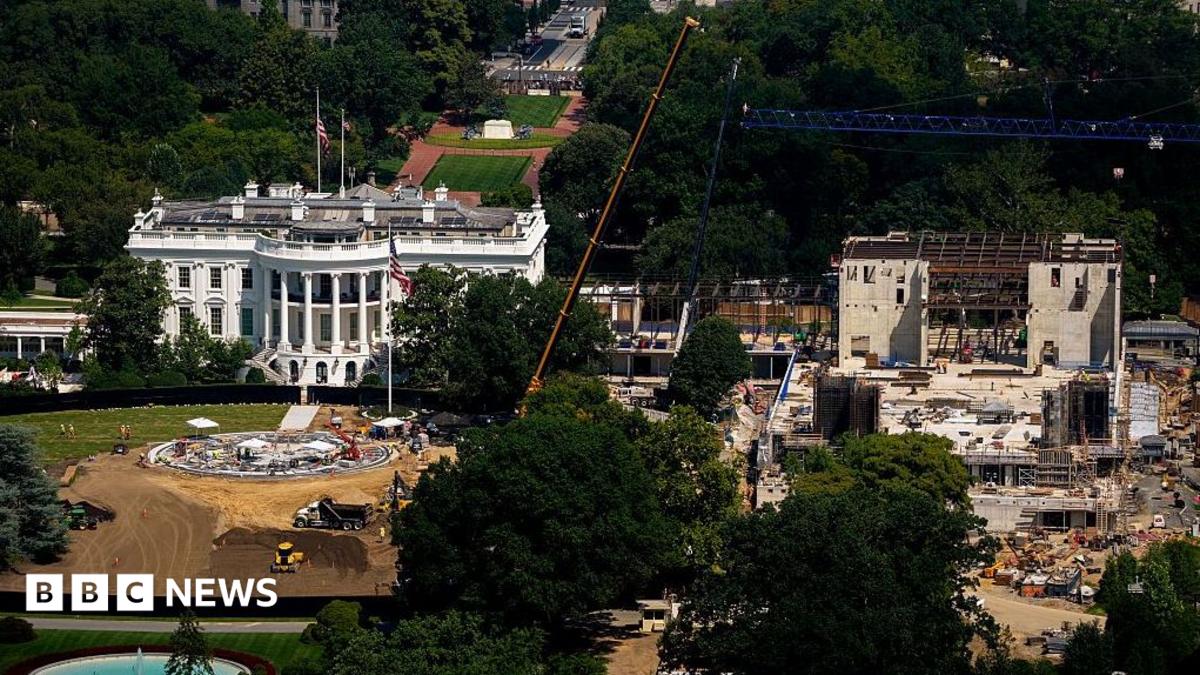
Reacting to the ruling, Trump posted that he was “glad” that the “baseless” lawsuit had failed to stop construction. “We live in the Golden Age of America and this building will be one of the largest ever built in Washington, DC,” he said. Trump has long argued that the White House needs a larger event space and, more recently, that it was important for his security. The Republican president emphasized the need for the ballroom after an alleged assassination attempt at the White House Correspondents’ Association dinner in April. But the National Trust for Historic Preservation argued that construction was causing irreversible damage to a historic landmark. Their position arose from a statement made by conservationist Alison Hoagland, who lives in Washington, D.C., and serves on the trust’s board of directors. Hoagland, who says he visits the neighborhood once a month, said he “would suffer professional and personal injury, including my aesthetic, cultural and historical interests, if a ballroom of the proposed form and scale were built.” In the dissent, Roberts said Hoagland’s claimed injuries were sufficient to allow the lawsuit to move forward. The ballroom project, along with the helipad being built on the South Lawn, are just part of the president’s broader effort to transform Washington’s urban landscape. His plans include renovating the Lincoln Memorial’s reflecting pool and a planned “Trump Arch” larger than the Arc de Triomphe in Paris.