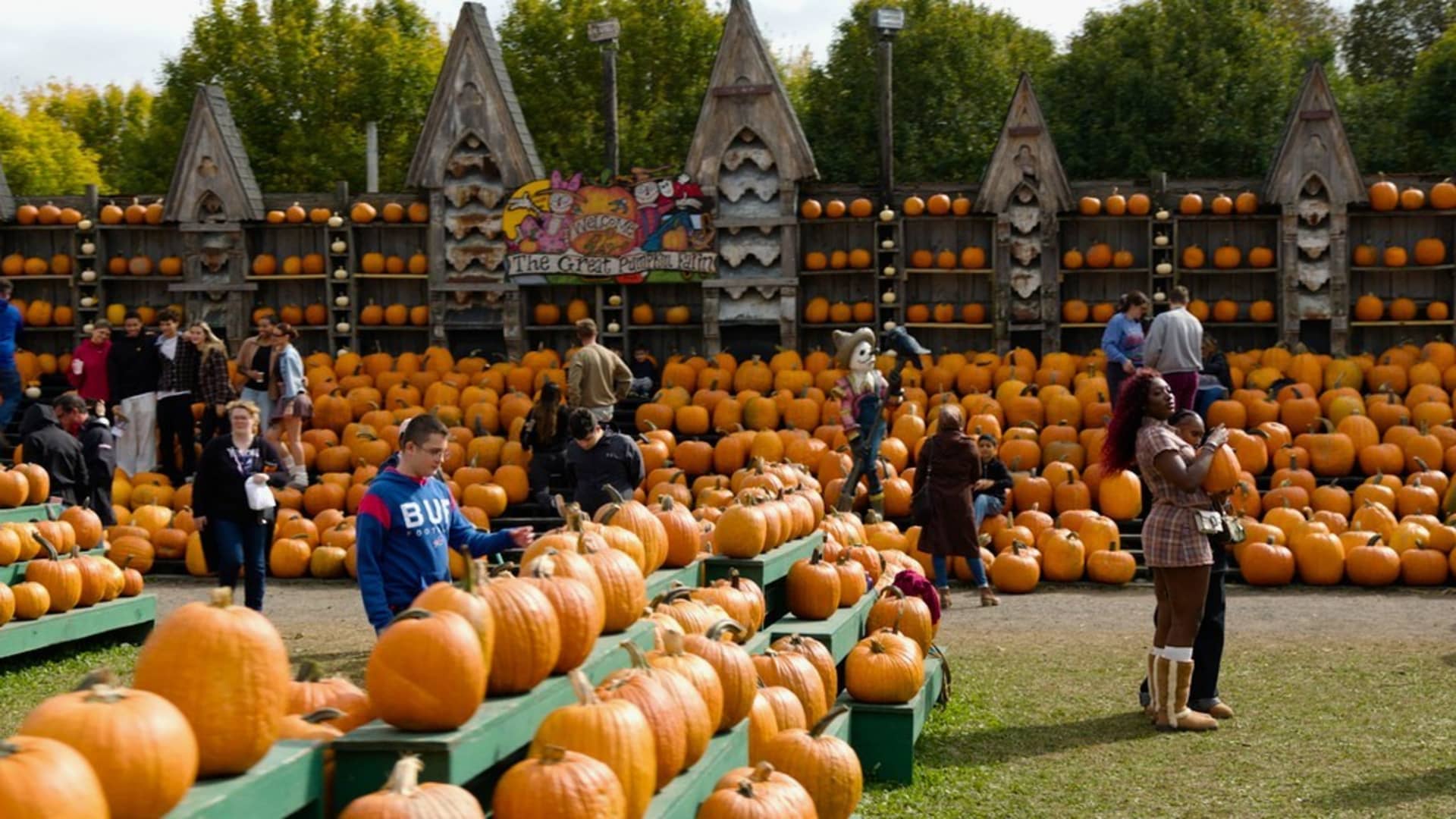
Three decades ago, when Kelly Schultz announced her intention to start a pumpkin farm, “everyone laughed at me,” she says. Schultz, a second-generation antiques dealer, had no prior farming experience when he bought a small farm in Clarence, New York, in 1993. No one believes he’s out of his depth now. Schultz, 74, is the owner and operator of The Great Pumpkin Farm, a seasonal attraction about 15 miles northeast of Buffalo that draws more than 100,000 visitors each fall. Great Pumpkin Farm generated $2 million in annual revenue in 2025, according to documents reviewed by CNBC Make It, and is open only seven weeks a year. This year, the farm is open to visitors between September 19 and October 31, and they don’t just come to buy pumpkins. With a $20 weekend admission ticket, fall enthusiasts can ride the farm’s pumpkin-themed train, explore its giant corn maze, and compete in pie-eating contests, among other attractions. Halloween is big business for Schultz and other seasonal business owners. Halloween-related spending is expected to reach $13.5 billion in the United States in 2026, according to a consumer survey by the National Retail Federation released in September. Among the 74% of Americans celebrating the holiday this year, 42% said they plan to carve a pumpkin. At The Great Pumpkin Farm, “attendance increases almost every year,” according to Schultz. During the fall, “there are people who come here almost every weekend,” he says. “They love it so much they keep coming back.” A giant pumpkin put them “on the map.” Schultz, who runs an antique store and a year-round antique auction business, says he was inspired to start his farm after visiting a pumpkin patch in upstate New York in the early 1990s. That farm had “muddy parking lots and few bathrooms,” he remembers, but there were “a zillion people” walking around and buying pumpkins. “I looked around and said, ‘I could do this better than this,'” Schultz says. So when the former cow farm next to his antique store came up for sale, he bought the 85-acre property for about $650,000, he says. With the help of other local farmers, Schultz learned to grow his own pumpkins and The Great Pumpkin Farm officially opened its doors in 1996. But Schultz had even bigger plans for his farm. That same year, he asked Ray Waterman, founder of the World Pumpkin Confederation, an organization dedicated to growing giant pumpkins and zucchini, to host his annual global pumpkin weigh-in at The Great Pumpkin Farm. Schultz purchased prize indemnity insurance, which covers the cost of contest prizes and promotions, and offered $50,000 to anyone who brought in a pumpkin weighing 1,000 pounds or more. He took out ads in newspapers “all over the country” to promote the weigh-in. The winning pumpkin, grown by a couple from Lowville, New York, broke the world record at the time at a whopping 1,061 pounds. Zoom In IconArrows pointing outward The Great Pumpkin Farm hosted its first pumpkin weigh-in in 1996. Courtesy of Kelly Schultz “We were featured in magazines and newspapers all over the world,” Schultz recalls. “That put us on the map from the beginning.” Great Pumpkin Farm still hosts a weigh-in event every October, and this year’s heaviest pumpkin weighed a whopping 1,908.5 pounds, nearly double the weight of the 1996 winner. Hay rides, pumpkin cannons, and more. These days, Schultz focuses less on growing pumpkins; To keep up with demand, he buys most of the farm’s pumpkins from nearby farms. But The Great Pumpkin Farm’s 50-foot pyramid of pumpkins, which is visible from the road, is still the first thing arriving visitors see. According to Schultz, the farm stocks more than 25,000 pumpkins each year. Zoom IconArrows Pointing OutwardsVisitors choose pumpkins to purchase at The Great Pumpkin Farm.William Muench | CNBC Make ItWeekend visitors pay $20 per ticket, which covers admission for both days. They can access a wide range of activities including hayrides, pie-eating contests, magic shows, a giant slide, live music, train rides, a children’s “boo barn” and pumpkin pedal go-kart rides, just to name a few. For an additional fee, visitors can try out the farm attractions, pumpkin cannons, zombie paintball train, carnival games, and the Buffalo Bills-themed corn maze. In addition to the farm bar and bakery, Schultz is home to festival food vendors whose offerings range from barbecue to specialty grilled cheese sandwiches. “You can come here and spend the day and still not have done everything,” he says. Weekdays do not require an entrance fee and are more discreet. Visitors can shop for pumpkins, visit the Halloween store, bar and bakery, and enjoy the outdoor playground, petting zoo and hay maze. Zoom In IconArrows Pointing OutSchultz Brings Zoo Animals to the Farm’s Fall Festival.William Muench | CNBC Make It Creating this fall festival takes a lot of work, according to Schultz. It employs more than 100 seasonal workers during the seven weeks the farm is open each year, and their job duties range from driving tractors for hay rides to serving pumpkin donuts. Rising gas costs are another major expense, Schultz says: “lots and lots of gallons of fuel” are needed to maintain the grounds and operate the tractors for hayrides. As Schultz tries to avoid raising admission costs, he predicts the company will “make a little less” in 2026. “The business has been profitable, but we generally take most of the money and try to reinvest it,” Schultz says. Zoom In IconArrows pointing outFor an additional entrance fee, the farm also offers carnival rides and games.William Muench | CNBC Make ItSince Schultz owns the land surrounding the farm (about 300 acres in total), there’s always room to expand, he says. Each year, their goal is to add “something new, something fun, or improve what we already have.” Creating a ‘generational business’ The farm has become a family operation: Schultz’s son Ben has helped him run it and his antiques business for the past 25 years. “I just like hanging out with my dad, that’s how I got involved in all this,” says Ben Schultz, 45. “I’m very proud of what he created here, and I’m happy to be there.” Their common goal for The Great Pumpkin Farm, according to Ben Schultz, is to “continue the momentum.” From its simple beginnings, “it’s hard to imagine it has become so big,” he says. Kelly Schultz’s grandchildren have also started helping on the farm, she says. “They love coming here,” he says. “Everyone wants to be here all the time, every day.” “I’m sure the pumpkin farm will be a generational business,” he continues. “It’s definitely a family event.” Zoom In IconArrows pointing outwardKelly Schultz and her son Ben in front of the pumpkin pyramid at The Great Pumpkin Farm.William Muench | CNBC Make ItThroughout October, the farm is bustling with activity, but after Halloween, everything closes, according to Schultz. Petting zoo animals return to their original farms; Amusement park attractions are packed up and removed, and pig farmers collect the remaining pumpkins to use for food. Putting everything away and cleaning the property takes about a month, Schultz says. During the rest of the year, about 20 full-time employees help maintain Great Pumpkin Farm’s old barn buildings and keep the grass mowed. Otherwise, Schultz and his family will have to go back to selling antiques, at least until next fall. Take control of your money with CNBC Select CNBC Select is editorially independent and may earn commission from affiliate partners through links.