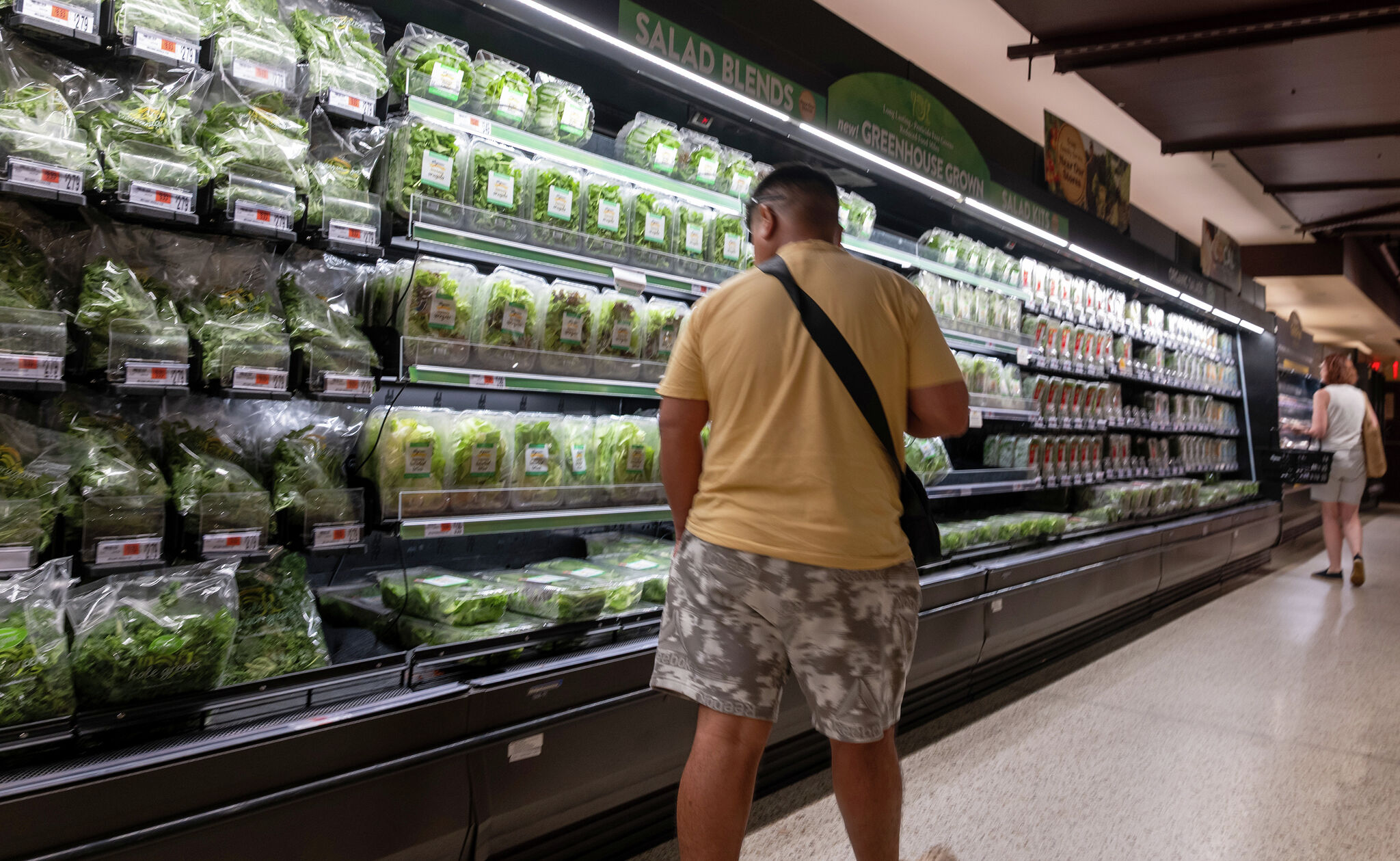
Heads of lettuce sit on grocery store shelves as federal and local health officials investigate a nationwide surge in cyclospora infections. The recalled iceberg lettuce linked to the multistate outbreak was not distributed in California.Spencer Platt/TNSSan Francisco has confirmed 10 cases of cyclosporiasis this year, including one involving a resident whose infection was genetically associated with the large, multistate outbreak that has sickened thousands, city health officials said.The finding is the first indication that a San Francisco resident has been connected through genetic testing to the outbreak investigation. But health officials said the patient had traveled elsewhere in the United States, and there is no evidence the person was exposed in San Francisco.The recalled iceberg lettuce linked to the multistate outbreak was not distributed in California, according to the California Department of Public Health.Article continues below this adAmong the other San Francisco patients who were interviewed, all reported recent international travel, city health officials said. The local investigation was ongoing.The cases come during an unusually severe year for cyclosporiasis nationally. The Centers for Disease Control and Prevention said Tuesday that it had received reports of 15,716 laboratory-confirmed infections acquired in the United States from May 1 through Aug. 17, compared with 1,180 during the entire May-through-August season last year.At least 828 people have been hospitalized and two have died. The CDC is reviewing another 11,841 illnesses that have not been confirmed or require further investigation.What health officials found in San FranciscoSan Francisco Health Officer Dr. Susan Philip speaks during a press conference on Feb. 9, 2022. Philip said Tuesday the city has confirmed 10 cyclosporiasis cases, including one genetically associated with the multistate outbreak after domestic travel.Gabrielle Lurie/S.F. ChronicleThe San Francisco patient whose infection was genetically associated with the multistate outbreak had traveled within the United States before becoming sick.Article continues below this adGenetic testing can help investigators identify cases that may share an exposure, but it cannot determine where someone became infected or identify the contaminated food by itself.California recorded 201 confirmed and probable cases from May 1 through July 15, including 39 classified as domestically acquired. Fifteen of those patients had traveled to other states. Most California cases historically are associated with international travel.U.S. cyclospora cases top 15,000The 15,716 confirmed domestic cases have been reported across 47 states, the District of Columbia and Puerto Rico.The largest outbreak has been linked to processed iceberg lettuce from central Mexico, while federal health officials are investigating at least six other clusters with no confirmed source.Article continues below this adThe CDC expects case counts to continue rising because it can take about six weeks for an illness to be identified, investigated and reported to the agency.Cyclospora symptoms and when to seek careCyclospora is a microscopic parasite spread through contaminated food or water. It causes cyclosporiasis, an intestinal illness marked by frequent watery diarrhea that can sometimes be “explosive.”Other symptoms can include stomach cramps, bloating, nausea, fatigue, loss of appetite and weight loss.Symptoms usually begin about a week after exposure and can last for weeks without treatment.Article continues below this adPeople with persistent or recurring watery diarrhea should contact a healthcare provider and mention cyclospora, which is not always included in routine stool testing.California health officials recommend washing produce thoroughly and following standard food-safety precautions. Washing can reduce contamination but cannot guarantee that cyclospora is removed. Cooking is the most reliable way to kill the parasite.